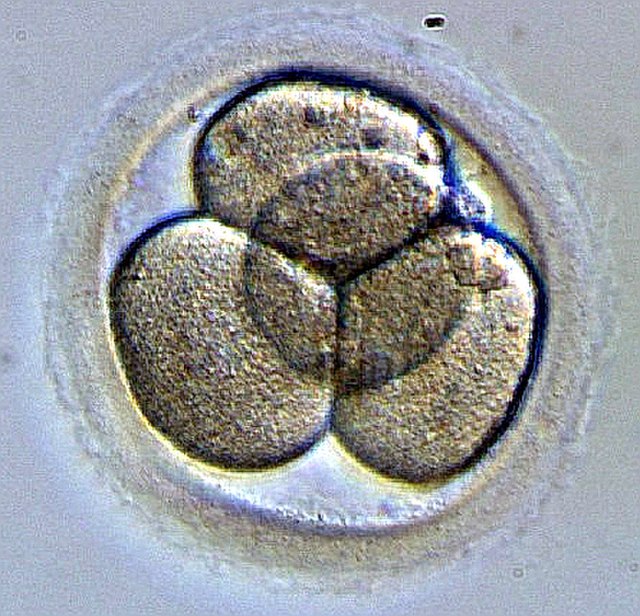
After the egg retrieval process, the mature eggs are immediately fertilized in a lab through the intracytoplasmic sperm injections (ICSI) process and grown to the blastocyst stage before being genetically tested and frozen.
The morning after the procedure, we got our first update from embryology. There were indeed 19 eggs retrieved during my procedure. Of those, 12 were mature enough to fertilize. Of the 12, nine fertilized properly, and two still had the potential to fertilize.
I was feeling pretty good. I knew to expect some attrition at every stage, but I thought nine was a good start. We’re hoping to have two kids, so as long as we get at least two viable embryos, I think we’ll be OK. Not that I wouldn’t be over the moon if we got more than that, but just in case.
Read more: EmbryologyOur next update was a few days later. Five embryos are still continuing to grow but haven’t quite made it to the blastocyst stage. That’s the final stage before the embryos are biopsied for genetic testing and frozen in cryo until you’re ready for a frozen embryo transfer (FET).
(Interesting side note: Success rates are better for frozen embryo transfers than they are for fresh embryo transfers. Another example of how IVF is just plain weird.)
I was a little disheartened only five of the nine had made it, but it’s still better than none.
The next day, another update: Three embryos made it to the blastocyst stage and were biopsied. “We expect to get your results in 10-14 days.”
Gulp.
Three? Only three?
What are my odds again for how many I should expect to be viable?
“At your age, we anticipate 50% of the embryos will come back viable.”
Another gulp.
OK. Well, at least there’s a pretty good chance we’ll get at least one embryo. It may suck to do this procedure over again in a few years, but at least we’d have some time to save up again and mentally prepare for the process.
And then we waited. And waited. And waited.
And, finally, a phone call…
 IVF That